


ThermAtlas
App Case Study

Sauna + Cold Plunge = Thermaculture
And It’s Here To Stay
The sauna and cold plunge trend is part of the longterm, overall wellness trend sweeping the United States.
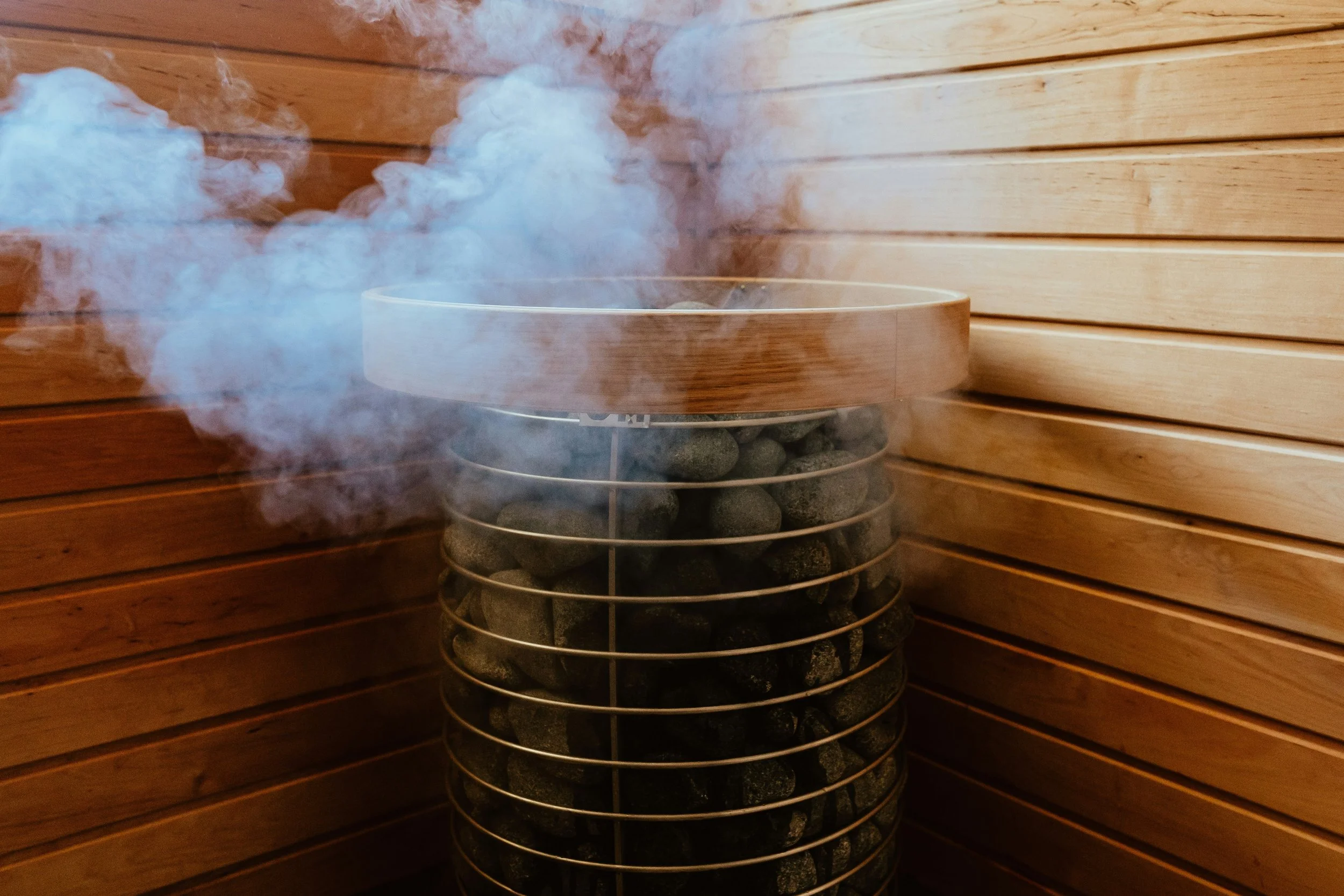
Thermaculture is a practice in which people arrive at a facility that offers a sauna and one or more cold plunge tubs.
Practitioners alternate between sweating in the sauna and freezing in the cold plunge tubs that benefits both body and mind.
In the last couple of years, scores of businesses have popped up all over the country that offer this ritual for paying customers.
Each facility varies in their offerings, with differences in amenities, heating elements for sauna, and the quality of the cold plunge tubs they have in their facilities.
Additionally, thermaculture facilities each have their own vibe and culture, ultimately making each one feel unique to the practitioner.

My hypothesis was that current methods for evaluating and discovering these facilities lack in addressing the specific pain points and desires of sauna and cold plunge enthusiasts.
Finding the sauna and cold plunge facility that meets your specifications is not so straight forward.
Thermaculture enthusiasts have particular criteria they look for when it comes to evaluating a particular sauna and cold plunge facility.
Current research and discovery methods often fall short of providing the kind of information that thermaculture practitioners are looking to use to make their decisions about where to sweat and chill.

Understanding How Sauna & Cold Plungers Make Decisions
I interviewed eight sauna and cold plunge practitioners who regularly use these type of facilities to get an insider perspective on how they go about searching for a sauna and cold plunge facility.
In my research I emphasized exploring what factors of a sauna and cold plunge facility are the most important to them.
I wanted to see how these factors align in their decision making process when they actually commit to paying and booking a sauna and cold plunge session.
Insights From Research
One major theme that showed up in my research was the various factors that play into their thermaculture behavior.
Cleanliness and the quality of the heat in the sauna were the two most important aspects that weighed into their choice.

The second major theme was their discovery methods.
Word of mouth was the most important factor but practitioners also consult the internet, using search engines, Class Pass, and a mix of apps including social media.


Defining the Core Functionality
Based on my research, I mapped out how a thermaculture practitioner would move through the app to achieve their goals.
Some of the main functions in this user flow include:
Creating an account with preferences
Searching for facilities
Filtering facilties
Reading reviews
Viewing a map with directions
Booking a session
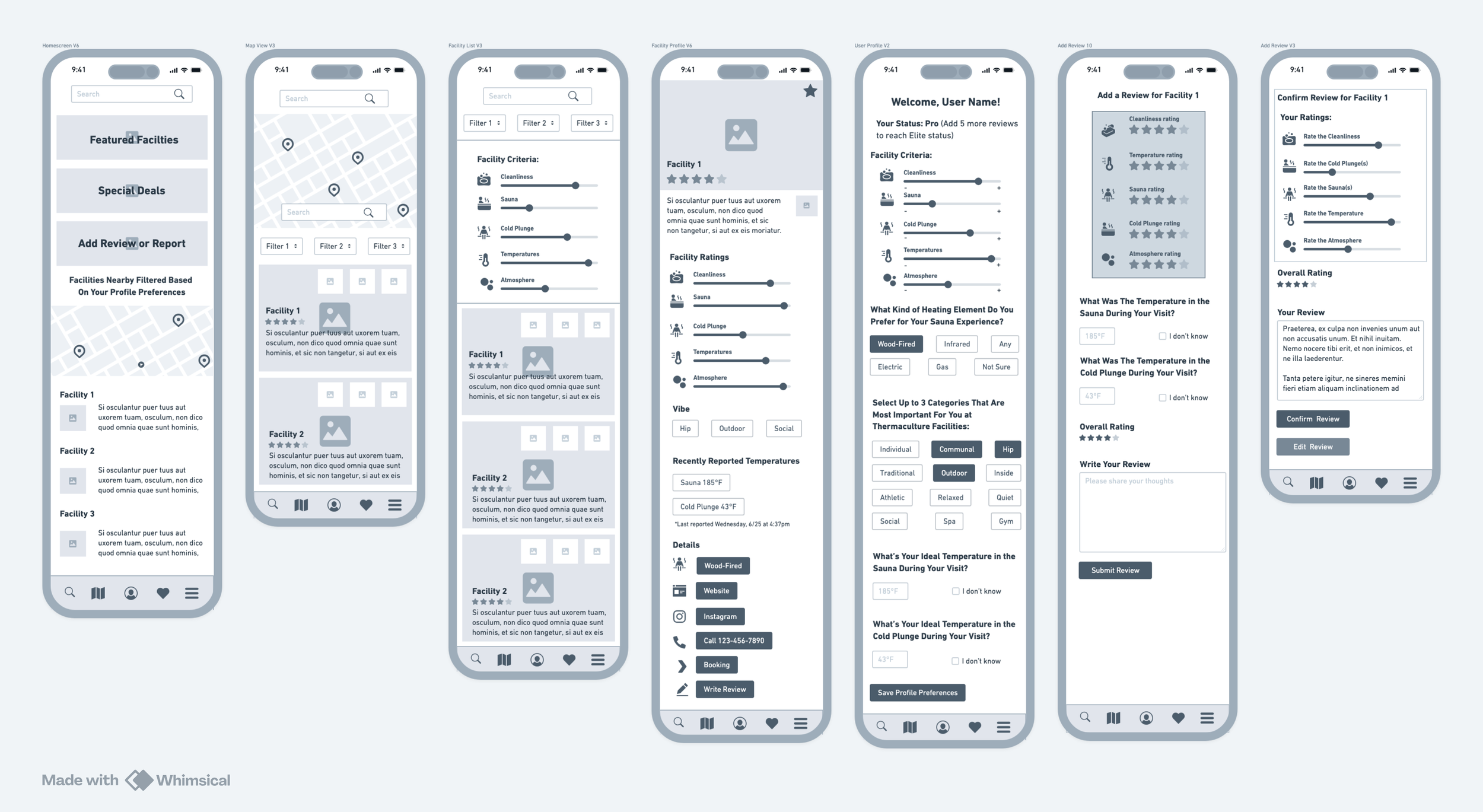
Building Low Fidelity Wireframes Based On User Research
Applying what I learned by creating the user journeys, I used wireframes to get a feel for the visual flow that was required for a user to be able to easily move through the app and find the info they want.
I worked to balance cognitive load with progressive disclosure and ensure that I highlighted the specific criteria that was most valuable for sauna and cold plunge practitioners.


I grounded ThermAtlas in five core values —authenticity, expertise, community, precision, and wellness—chosen to resonate with health-conscious users seeking reliable thermal therapy guidance.
Through mood boarding and visual exploration, I translated these values into a cohesive brand identity that reflects both the product's purpose and its audience.
-
It all begins with an idea. Maybe you want to launch a business. Maybe you want to turn a hobby into something more.
-
It all begins with an idea. Maybe you want to launch a business. Maybe you want to turn a hobby into something more.
-
It all begins with an idea. Maybe you want to launch a business. Maybe you want to turn a hobby into something more.
High Fidelity Wireframes
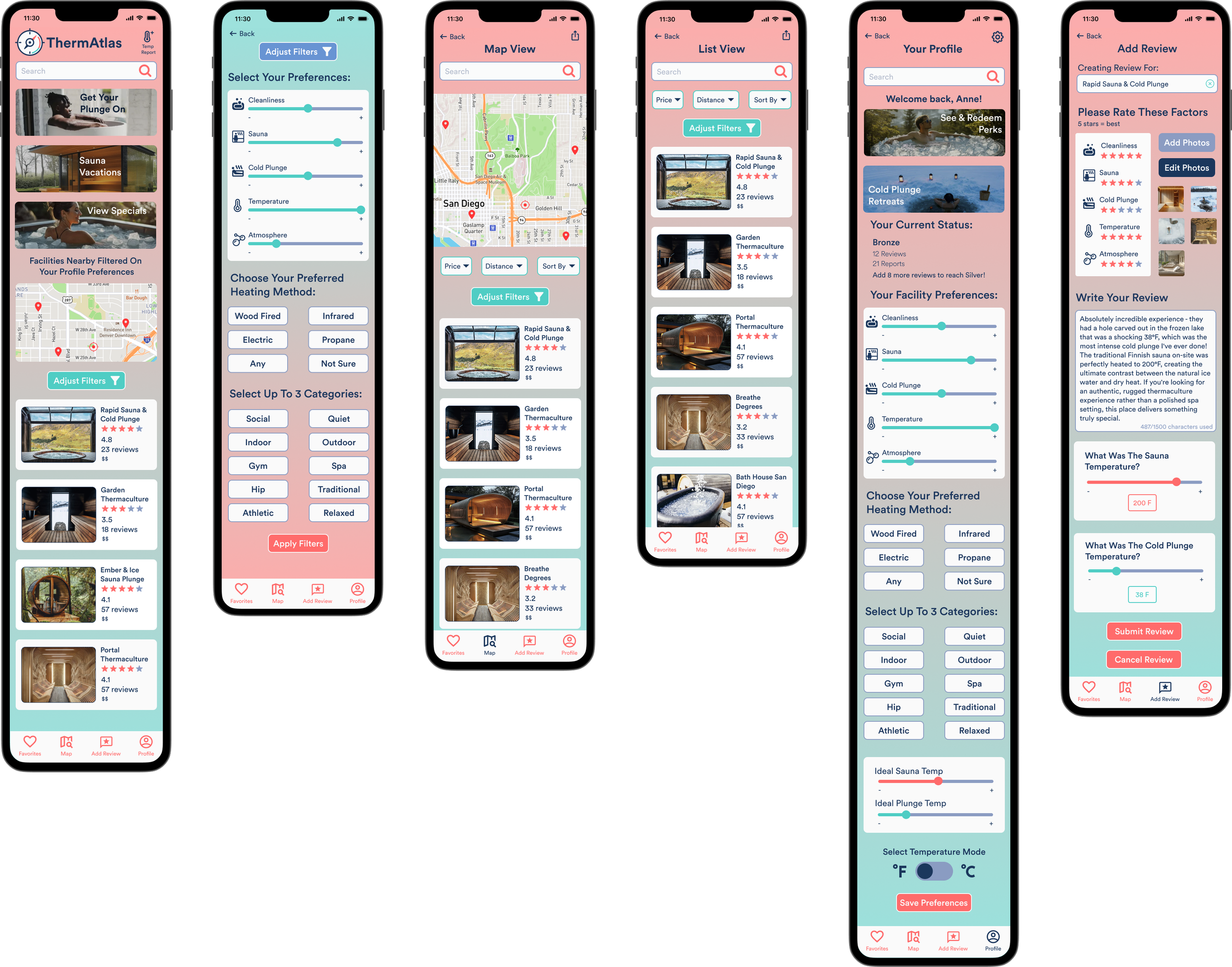
I developed high fidelity wireframes that incorporated the brand identity of ThermAtlas, with colors, typography and style elements to bring the brand to life.
I further accentuated the nuanced elements that sauna and cold plunge regulars value in their decision making process:
Temperatures
Cleanliness
Heating method
General vibe and atmosphere
Descriptive reviews
Distance
Key Usability Testing Iterations
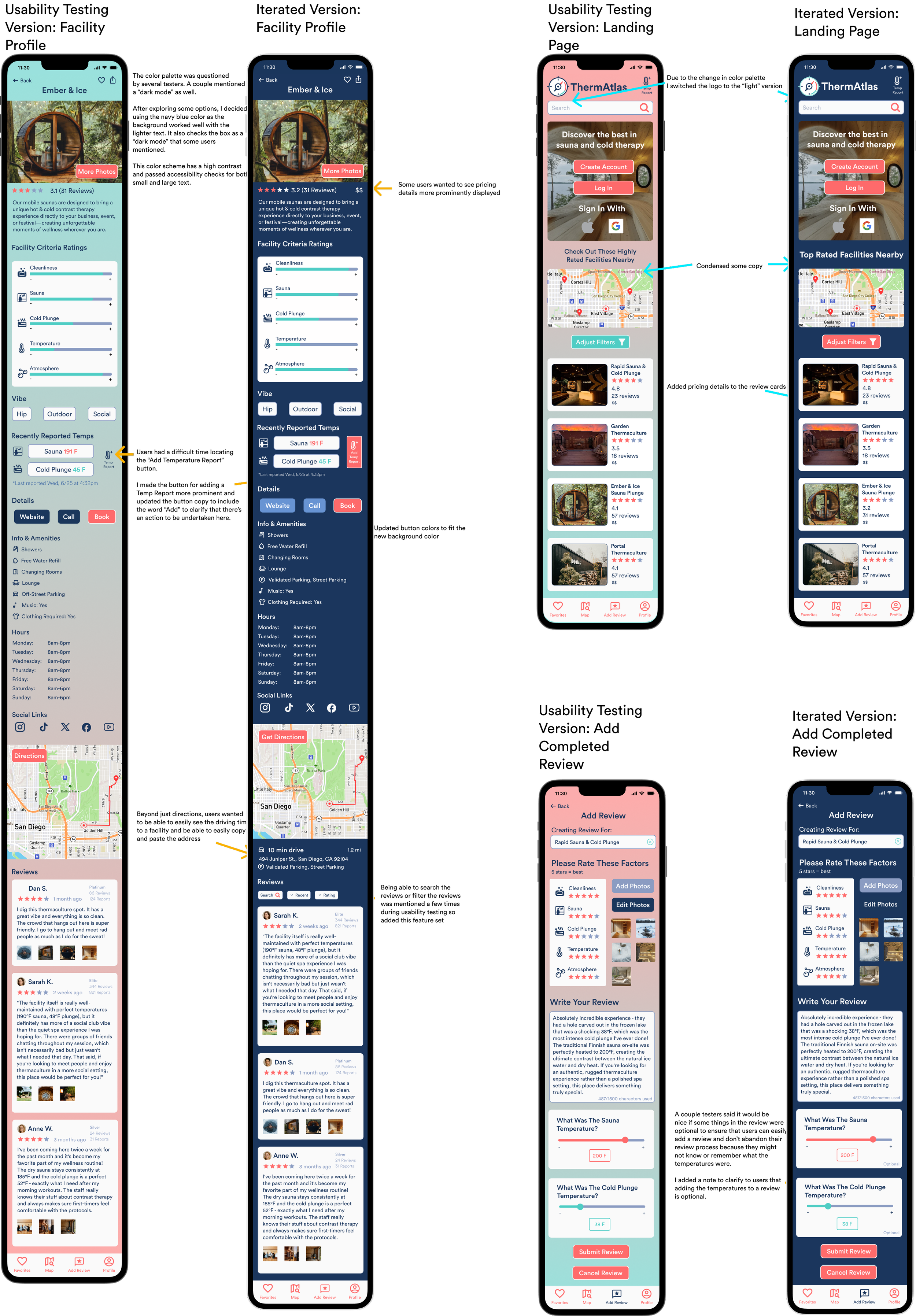
I tested my high fidelity prototype with 5 sauna and cold plunge practitioners. Using testing interview guide that I created for the core user journeys, I gave each participant basic cues to incite them to take action using the app prototype.
Listening intently, I carefully asked questions about their thought process as they took actions within the app to achieve the assigned task. During this process, I was able to discern parts fo the app that we’re confusing or unhelpful to achieving my design goals. Synthesizing the complete results of my usability testing process led to some significant changes within the design of my app.
The results are described in the images below. Some of the most important changes were:
Color scheme change
Adding a price indicator icon
Temp Report Button: Made the function of reporting a quick temperature “check-in” in which the user reports on the temperatures of the sauna and cold plunges when they enjoyed a session
ThermAtlas Final Prototype
It’s only through exposure to your intended audience that you can see if your design is working or not.
Iteration is essential.
Key Learnings
The project is never done and I enjoy getting feedback from users because it’s this testing and feedback that helps you design something truly great, usable and valuable
Working on a project for a tribe of people who care deeply about a particular topic or activity is an excellent opportunity to apply design thinking because their thorough knowledge of the topic will offer you ample problem spaces to explore.
Seeking perfection can be limiting. Instead, I focused on solving specific pain points and got feedback early and often.